
Jane L. Stern Gallery
Floating Beauty examines historical perspectives on women and their depiction in art in Edo Period Japan (1615–1858). Made up entirely of woodblock prints created in the ukiyo-e style, this exhibition highlights female characters in literature, kabuki theatre, and poetry; the courtesans and geisha of the Yoshiwara district; and wives and mothers from different social classes performing the duties of their station, in order to gain some insight into the lives of women in pre-modern Japan.
In the tradition of ukiyo-e, women are most commonly represented in the bijinga genre, meaning “pictures of beautiful women.” Featured in these prints are beautifully depicted courtesans with elaborate hairstyles, heavy make-up, and highly decorative clothing. Looking beyond the bijinga, this exhibition shows that women in Edo society were hard working and industrious individuals. Society scorned idleness in women of all ages, and even high-ranking females were required to perform a litany of tasks. Women were expected to be subservient but not weak; weakness would not run a demanding household or manage business affairs.
Over fifty woodblock prints will be featured in the exhibition, including works by ukiyo-e masters Suzuki Harunobu, Kitagawa Utamaro, Katsushika Hokusai, Utagawa Kunisada, Kikugawa Eizan, and Utagawa Hiroshige. The entire exhibition is taken from the permanent collection of the Reading Public Museum in Reading, Pennsylvania, who organized the exhibition.
Gallery admission is free every day of the week. Generous support provided by Art Bridges Foundation’s Access for All program; the North Dakota Council on the Arts, which receives funding from the state legislature and the National Endowment for the Arts; the Arts Partnership, with support from the Cities of Fargo, Moorhead and West Fargo; the McKnight Foundation; The FUNd at Plains Art Museum; Giving Hearts Day donors; Spring Gala sponsors; and hundreds of Plains Art Museum members like you.
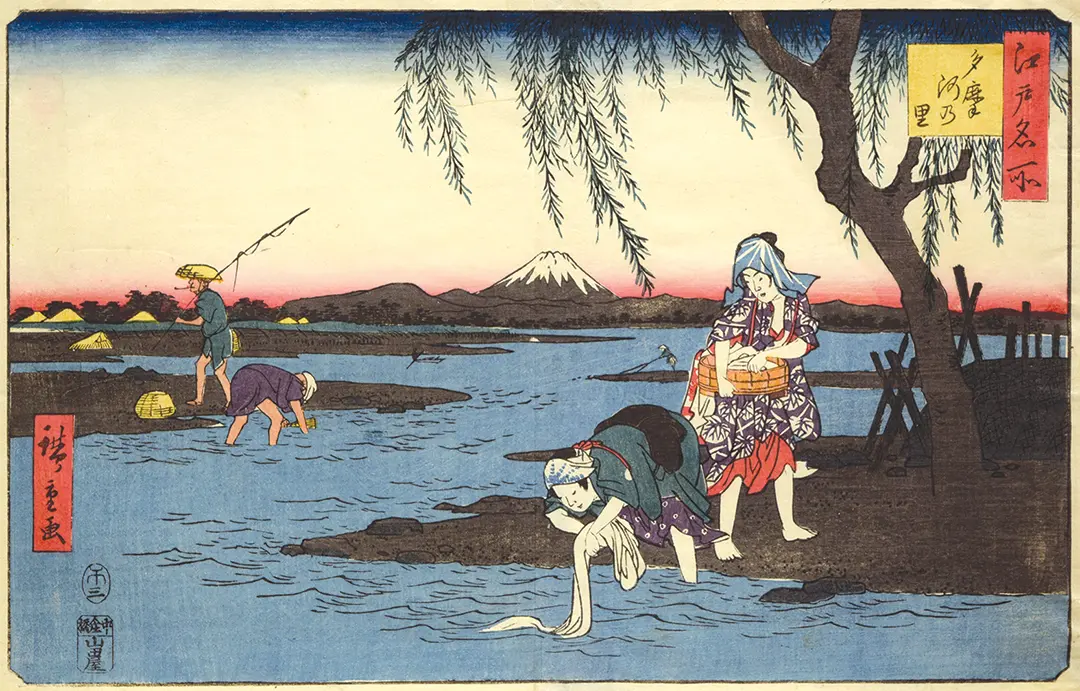
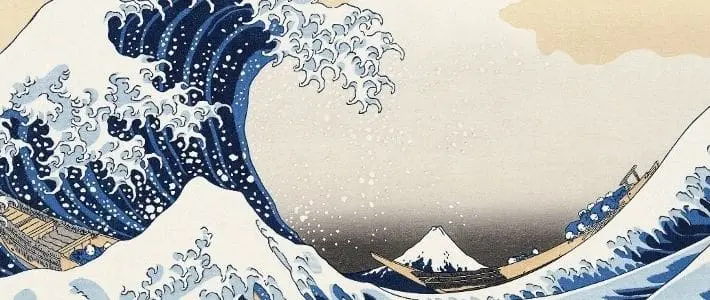
top: Utagawa (Ando) Hiroshige I (Japanese, 1797-1858), Village by the Tamagawa River, 1858, ink on paper, 8 ¾ x 13 ½ inches, Museum Purchase, 1979.584.1C. Reading Public Museum, Reading, Pennsylvania • bottom: Katsushika Hokusai (Japanese, 1760 – 1849), The Great Wave off the Coast of Kanagawa, 1830 – 1831, ink on paper, 10 x 14 1/2 inches, Museum Purchase, 1930.388.1. Reading Public Museum, Reading, Pennsylvania.
Art History Lecture with Dr. Susan Lee
Thursday, September 18, 6-7 PM, Free This talk explores how ukiyo-e, with its focus on the beautiful woman, played a role in the shaping of a narrative of “Japanese art” that emerged in the early 20th century. It illustrates this compelling historical moment with discussion of works by artists like Tsuchida Bakusen (1887-1936) and Paul Gauguin (1848-1903).
Curatorial Public Tour
Thursday, July 10, 6-6:45 PM, Free
This curatorial team-led tour offers insight into the cultural, social, and artistic contexts that shaped ukiyo-e during Japan’s Edo period (1603–1867).
Japan Art Festival
Thursday, July 31-Saturday, August 2
Looking for a fun and inspiring experience this summer? Please join us at the Japan Art Festival, a special event where you can deepen your understanding of Japanese art. We will learn more about the process and style of Ukiyo-e, the artwork featured in our remarkable exhibition. For more information, please click here.